Platform Selection
Social commerce conversion
Trace the path from social product discovery to checkout, identify where shoppers get stuck and prioritise practical conversion fixes.
Improve social commerce conversion by tracing a product from a post to the buying decision and checkout. Find where shoppers must search again, resolve conflicting information or abandon a broken step.
Follow one product through the journey
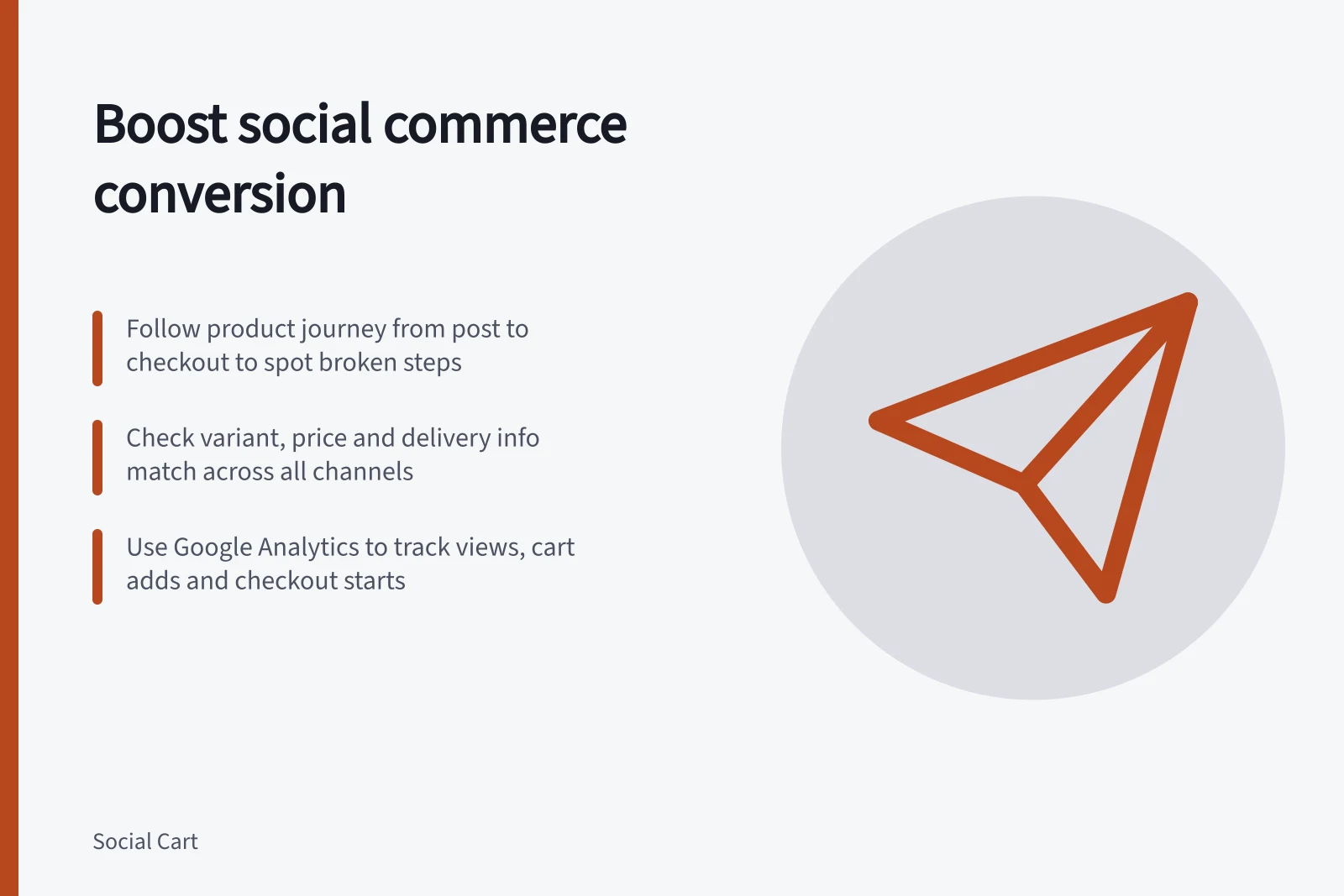
Open an active post on a phone and follow its shopping action to the product. Select the advertised variant, check the offer and continue towards payment without placing an order. Note every point where the item, selection or price changes unexpectedly.
Check every route the business uses, such as a product tag and a website link. What shoppers see depends on the channel and the merchant's setup. A working link does not establish that the intended variant is available or that the offer remains consistent through checkout.
Ask four questions:
- Can the shopper reach the intended item without searching for it again?
- Can they judge whether the item fits their needs, using clear variant, price and product information?
- Can they understand delivery options, likely timing and charges as soon as those details can be stated accurately?
- Can they complete the order on the device they are using?
Pros and cons of using social proof in e-commerce
- ProsBuilds trust, increases perceived value, boosts urgency (e.g., '5 people viewing this')
- ConsCan mislead if not accurate; may violate ACCC rules if claims are false or misleading
Diagnose the stage, then choose a fix
If shoppers interact with a product but do not reach its page, inspect the destination and page load. If they reach the page but seldom add the item to cart, review the offer and whether the listing matches the post. If they begin checkout but do not finish, inspect costs, form errors and payment steps.
These patterns identify places to investigate; they do not prove why an individual shopper left.
Fix a broken route or inaccurate offer first. Then address missing decision information and needless steps. A shorter journey may still be unhelpful if it hides a variant or delivery condition the shopper needs.
Include actions that can reveal a transition problem, not just completed orders. Item views, cart additions, checkout starts, purchases and refunds each mark a different stage; an item selected from a list, a cart removal or a promotion applied may also help explain what happens between product discovery and purchase.
Google Analytics ecommerce events can also quantify popular products and show the influence of promotions and product placement on revenue.
Define each measure and its denominator before comparing periods, and report purchases and refunds according to their own definitions.
Validate the evidence behind a fix
Match each measure to a defined shopping action. Use those distinctions to locate a break in the journey without treating every interaction as the same conversion.
Prioritise changes you can verify
List the observed problem, affected product and proposed correction. Start with failures that prevent purchase or make the offer inaccurate.
After a change, recheck the public route and watch the relevant outcome. Compare similar traffic and conditions where possible; a promotion or stock change can obscure the effect of an edit.
Treat claims in the post and product route as part of offer accuracy. The Australian Competition and Consumer Commission says it can require businesses to back up claims about products or services, and may investigate possible misleading claims.
Check that claims shoppers rely on are supportable before prioritising changes that make them more prominent.
Keep a record of the evidence for an offer correction, such as the affected product information and the claim that needs checking. The ACCC accepts reports about possible misleading or false claims. It uses them to inform its education, compliance and enforcement work; it does not resolve individual disputes or provide legal advice.
In this guide
- Reducing steps between discovery and checkoutMap the route from a social product to checkout, remove needless detours and check that the right variant and offer survive.
- Improving mobile product pages for social visitorsCheck product match, variant clarity, buying controls and mobile performance on pages reached from social content.
- Showing delivery expectations before the buying decisionExplain likely delivery cost, destination limits and timing before checkout, with estimates and qualifications shoppers can understand.
- Testing whether a shopping collection helps users chooseSet a useful choice question, compare collection and direct routes fairly, and judge outcomes beyond collection clicks.