Platform Selection
Part of Social commerce platform selection
Comparing supported shopping features with the store's needs
Match product tags, collections and video shopping features to the customer action your store needs, with their documented limits.
Compare the customer’s next action with the content format: a product tag leads from an item in content to its details, a collection groups products for range browsing, and YouTube Shopping is relevant when a product is featured in a video or live stream. Then check whether the retailer’s account can support the required route and whether the team can keep its tags and collection current.
Describe the action
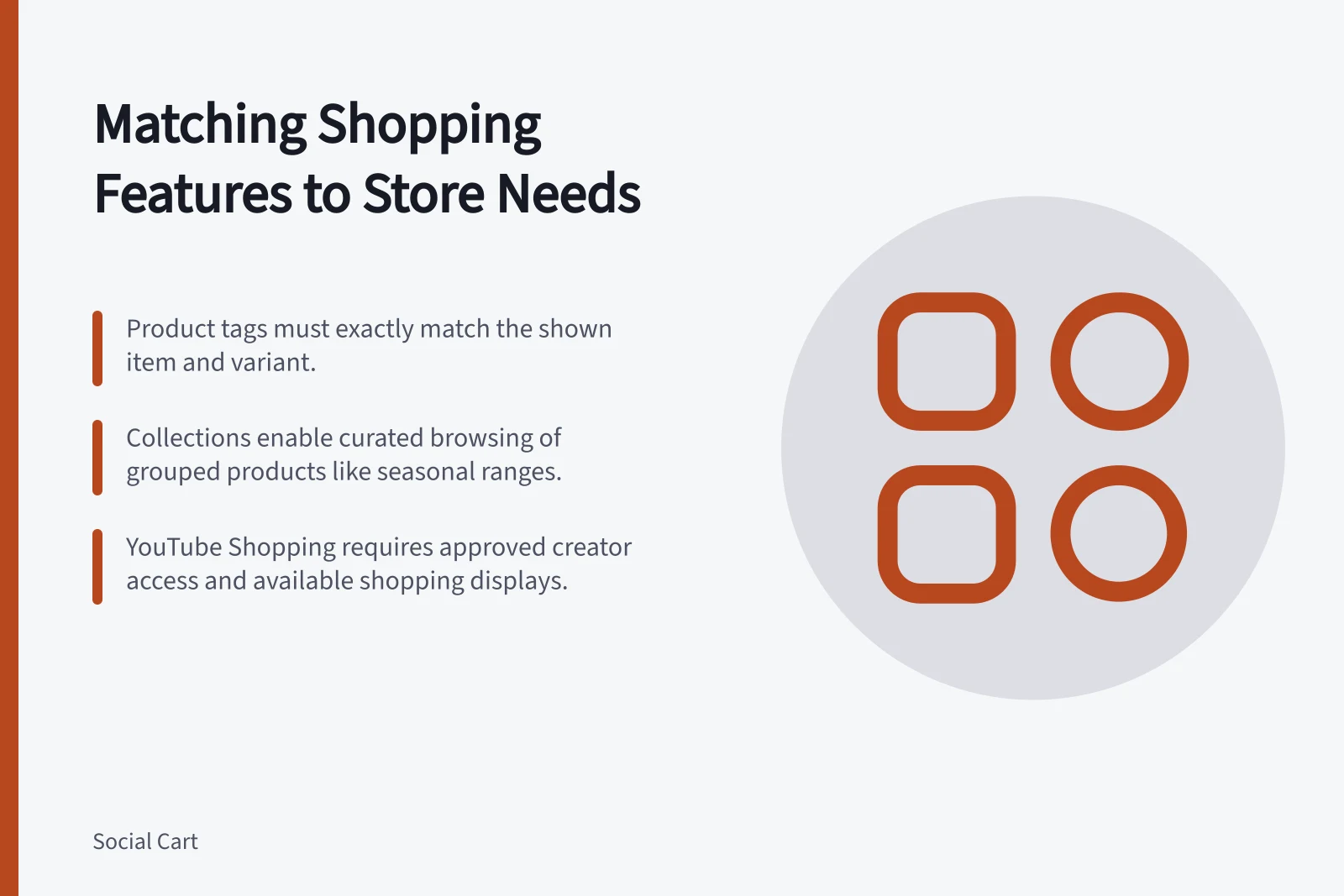
For a shopper who sees an item in an Instagram feed post, photo, video or Story, a product tag opens details including price, colour and size availability, plus related items. Match the tag to the exact item shown, including its variant.
Facebook product tags connect feed posts, Reels and Stories with products. A Facebook Shop collection serves a different task: browsing a grouped range, such as best-sellers, seasonal needs, gifts or routines.
YouTube Shopping suits customers inspecting products featured in a video or live stream. Its fit depends on whether the shopping display required for that content is available in the retailer’s account.
Compare the documented feature
A product tag is the closer fit when a post focuses on one item and the shopper wants its details. Related items can extend discovery, but a tag does not provide the same curated range-browsing route as a collection.
Compare these features with the formats the retailer actually publishes. Instagram product tags suit feed posts, photos, videos and Stories; Facebook product tags suit feed posts, Reels and Stories. A collection is useful when the team needs to present a grouped selection rather than one featured item.
For creator content, check whether the creator is approved to tag products. An approved creator can tag products in their own content; without tagging access, that route is unavailable.
Record the consequence of each gap
Assess each feature against three needs: the customer’s task, the content format the retailer publishes, and the work required to keep the feature accurate. Treat an exact product match as essential for tags, and assign an owner to keep a collection’s selection current as products change.
Mark an action available, conditional or unavailable for the proposed setup. Use the retailer’s account to check for the required feature in the intended format, and keep evidence such as the visible account option and a matching item or content example; these labels are review decisions, not platform status codes.
A tag misses the task if it identifies a different item or variant from the one shown. If a required video or live-stream shopping display is unavailable, or a collection cannot be kept current, choose another route for that customer action.