Shoppable Catalogues
Part of Social commerce trust
Showing genuine product evidence in a social storefront
Match storefront product claims to images, specifications and demonstrations, with important limits visible.
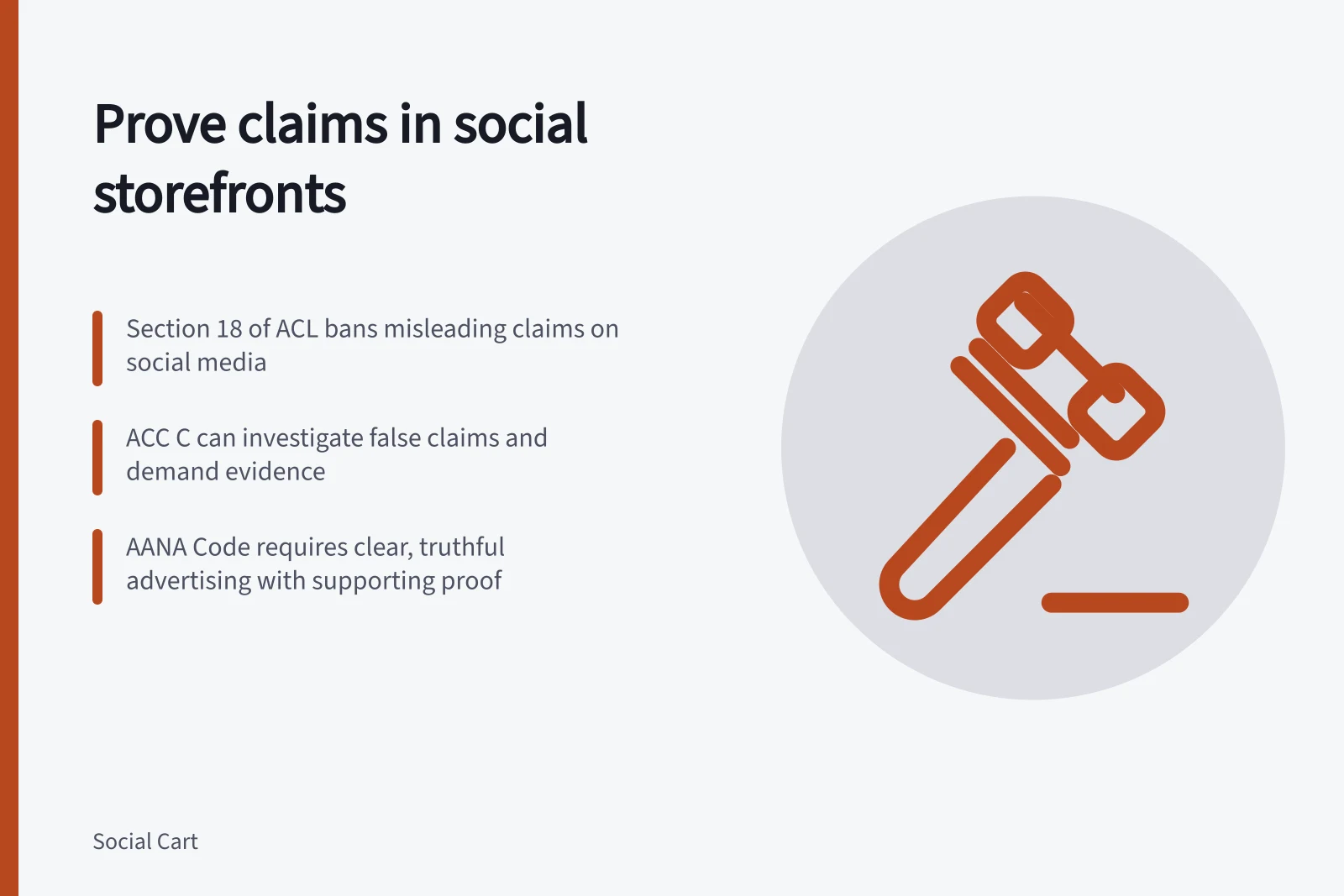
An Instagram product offer should show evidence for the precise claim beside it, not imply a broader result. Section 18 of the Australian Consumer Law prohibits misleading or deceptive conduct. The ACCC can require businesses to back up claims made on social media and may investigate false or misleading claims.
The Australian Association of National Advertisers (AANA) Code of Ethics says advertising must not be misleading or deceptive, or likely to mislead or deceive. Its Practice Note guides the Ad Standards Community Panel in applying the Code.
ACCC Enforcement Actions on Misleading Claims
- Enforcement Authority
- Australian Competition and Consumer Commission (ACCC)
- Review Investigation Powers
- ACCC accepts reports of fake or manipulated online reviews
- Code of Ethics Body
- AANA Code of Ethics and Ad Standards Community Panel
Work from the claim
For each featured product, identify what shoppers need to decide: what is included, which version is pictured, its size or how a feature works. Match every proposed statement to material the retailer actually holds; if it does not support the wording, narrow the claim or leave it out.
Record the claim, exact product or variant, supporting material and the conditions under which the claim holds. For example, a claim that a variant has a particular dimension needs a checked specification for that exact variant; a photograph can show its appearance but not establish that measurement.
A filmed result supports only what the footage shows under its conditions, including the setup and accessory used. A claim that a pictured accessory is included needs to match the exact version’s inclusions; the image alone cannot establish that the accessory comes with the product if it is sold separately.
Show the item being sold
Use images or footage of the offered version, or identify a different version plainly. Say when a visible prop or accessory is sold separately if shoppers might otherwise think it is included. A close-up can reveal a feature while hiding scale; add a wider view or measurement when scale affects the choice.
Read the finished image, overlay, caption and spoken words together. An edit can hide a setup step or make a conditional result look universal. Keep material qualifications legible in the customer-facing view and near the offer; they must not contradict its main message.
Keep customer evidence in context
A genuine customer review reports an experience; it is not independent product testing. If the storefront displays a rating, show the number of reviews behind it. Do not present a review of an older model as evidence about a changed variant without explaining the difference.
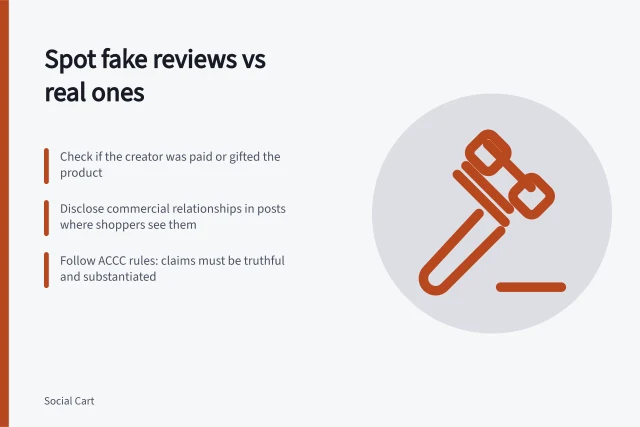
The ACCC accepts reports about fake or misleading online reviews and review manipulation, and may investigate misleading review conduct. Treat reviews as evidence of the reviewer’s experience, not proof of a broader product claim.
Before featuring an item, compare the evidence with the current listing: variant, inclusions, specifications and any claim that could change a purchase decision. Check the public presentation on a phone, then revisit it when the product or supporting material changes. If there is a mismatch, correct the claim at its source and in the visible offer.
Customer Reviews vs. Product Testing Evidence
- Genuine Customer ReviewReports personal experience; not independent testing
- Independent Product TestConducted under controlled conditions; provides verifiable data
- Use in MarketingReviews can support claims only if context is clear (e.g., number of reviews, model version)
- Misleading PracticePresenting an old model’s review as proof for a new variant without disclosure