Social Service
Part of Social commerce trust
Explaining a brand's return process where shoppers can find it
Explain where social shoppers can find return steps while separating change-of-mind terms from Australian Consumer Law rights.
Put a clear path to return information beside the social shopping offer, and make the full process available before payment. Shoppers need to know how to contact the seller, what happens after they report a problem, and which terms apply to a voluntary change-of-mind return. The ACCC educates businesses and consumers about rights and obligations under the consumer guarantees.
Separate change of mind from a product problem
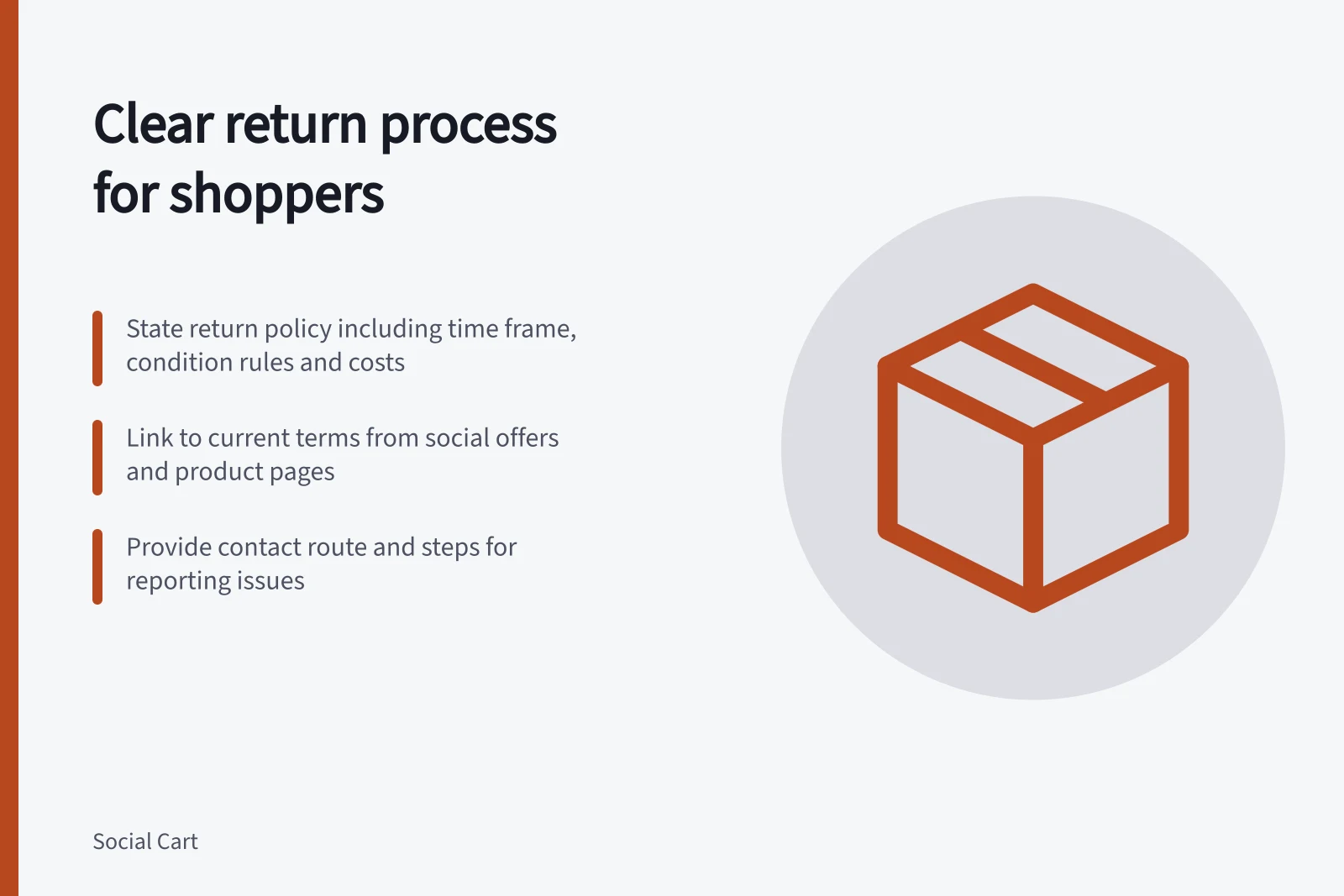
For a change of mind, state the retailer’s actual policy: time frame, item-condition rules, return method and any costs. Describe the policy clearly in the social offer and link to the current terms. If a change-of-mind policy is offered, make its terms easy to find.
For product problems, the ACCC educates consumers about their rights and responsibilities under the consumer guarantees. The ACCC does not resolve individual disputes or give legal advice about a consumer’s right to a repair, replacement or refund for a faulty product or service. It also does not resolve individual disputes about a business’s right to be reimbursed by a manufacturer, or give legal advice on whether a business is entitled to be reimbursed by a manufacturer.
Change of Mind vs. Product Problem: Key Differences
- Legal BasisVoluntary policy – no legal obligation under Australian Consumer Law
- Consumer RightEntitled to a remedy if product is faulty, not as described, or unfit for purpose
- Item ConditionMust be unused, with tags attached – may incur restocking fee
- RemedyRefund, replacement, or repair – at the retailer’s choice if fault is proven
- Proof RequiredNone for consumer guarantees – seller must prove product was not faulty
Give shoppers a usable starting point
A cue such as “Returns and product problems” can lead from the social offer to the retailer’s current process. That process should tell shoppers:
- Which contact route the seller monitors.
- What information helps identify the purchase and explain the issue.
- How the business will acknowledge, assess and update the request.
- How a return or remedy will be arranged when appropriate.
- Where to find the separate change-of-mind terms.
Use instructions the receiving team can carry out. Ask customers to use the support route for order details rather than posting them in a public comment.
Check the message across the route
Compare the social profile, product page, checkout information and support instructions. If the retailer advertises “free returns”, explain which circumstances that claim covers. A short caption may lead to fuller terms, but it must not create an impression those terms contradict.
Review the route when a contact channel, voluntary policy or fulfilment arrangement changes. Check the public view on a phone so the process remains reachable and consistent with current support instructions.