Social Service
Part of Social commerce trust
Distinguishing customer reviews from paid demonstrations
Tell customer reviews from paid or gifted demonstrations, disclose incentives and preserve the reviewer’s actual experience.
A customer review is a genuine consumer’s account of using a product and an independently held opinion. A paid or gifted demonstration is promotional content made under a commercial relationship; a creator can use a product and still have that relationship. Classify the content by who made it, whether they used the product, what was supplied and whether the opinion is independent.
Identify the relationship
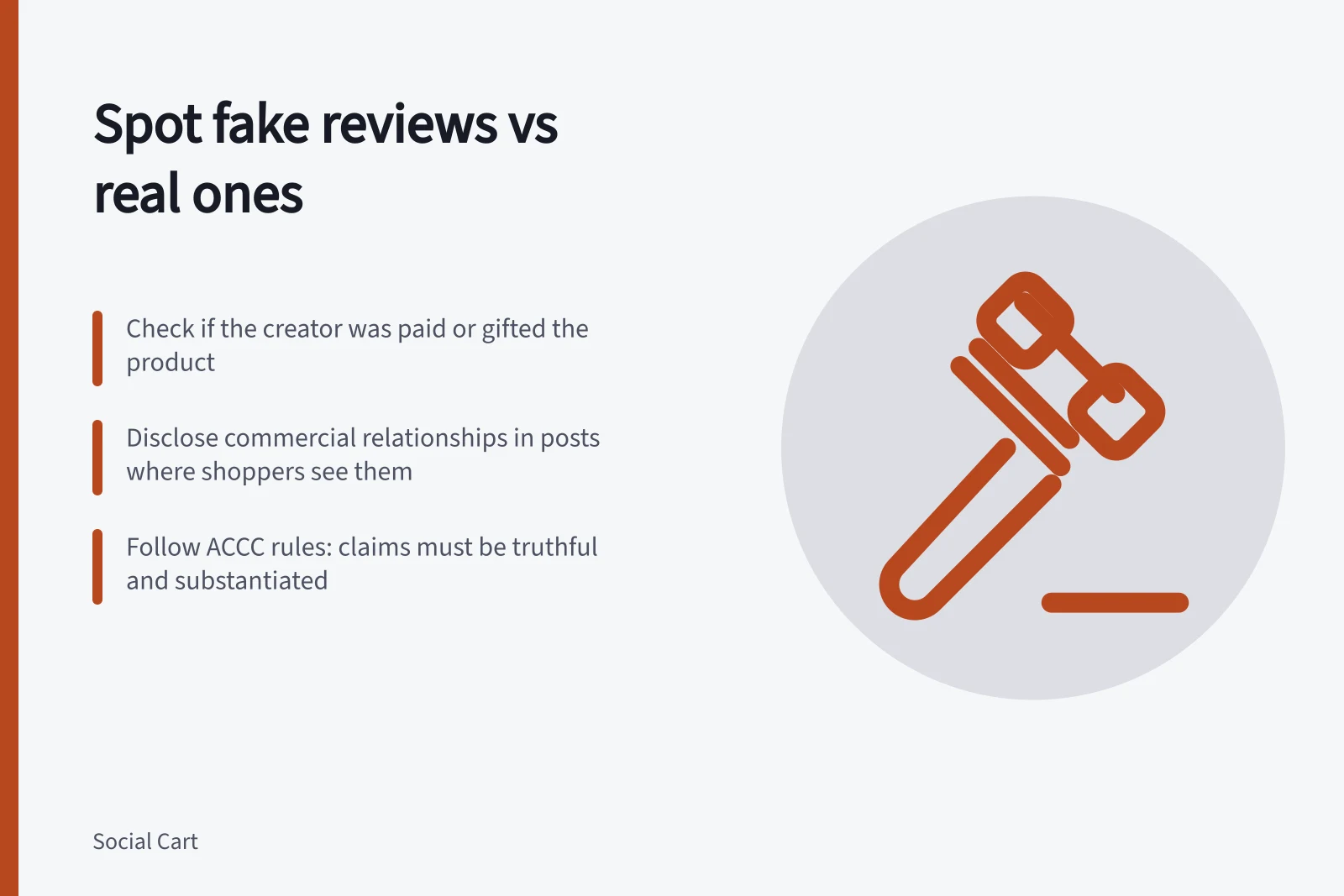
Check who made the content, whether they used the product, what the retailer supplied and whether the opinion is independently held. A genuine customer’s review can still be a review when the retailer later features it. If the reviewer received a discount or gift, disclose the incentive; the benefit alone does not establish whether the account is genuine.
A creator paid or given a product to make a demonstration is producing content under a commercial relationship. Do not present it as an unconnected customer review. Present staff content as the retailer’s own content.
A product tag or shopping link does not disclose payment, a gift or a commission. Make the relationship clear where shoppers see the post, and check how the finished post first appears on a phone. On a review page, explain prominently the nature and extent of the commercial relationship and its impact, if any.
The Australian Consumer Law applies to online advertising as it does to other advertising: claims must not be false or misleading, and must be capable of substantiation. The ACCC provides guidance, accepts reports about fake or misleading online reviews and claims, and can investigate and may take compliance or enforcement action.
Customer Reviews vs Paid Demonstrations: Key Differences
- Who created the content?
- Genuine customer or independent creator
- Relationship with retailer?
- No commercial relationship (independent)
- Was a product provided?
- Not received (or only used after purchase)
- Disclosure required?
- Only if incentive was given (e.g. discount, gift)
- Content type
- Personal experience and opinion
- Who created the content?
- Paid influencer, staff member, or affiliate
- Relationship with retailer?
- Commercial arrangement (paid or gifted)
- Was a product provided?
- Yes, as part of a promotional agreement
- Disclosure required?
- Yes – must be clearly stated in post
- Content type
- Promotional demonstration or endorsement
Preserve what the person actually said
A reviewer may say a bag felt comfortable to them; that does not establish that it suits everyone. A filmed fastening may work under the conditions shown without proving an unshown durability claim. Keep each statement tied to the experience or evidence behind it.
When sharing a review, compare the final edit with the original. Do not cut a material reservation so the opinion appears more favourable. Check proposed factual corrections with the reviewer or creator without rewriting their account of use.
Steps to preserve authenticity in shared reviews
- Compare final edit with original reviewEnsure no material reservations were removed
- Do not alter wording to make opinions more favourableKeep reviewer’s voice intact
- Check factual corrections with the reviewerWithout rewriting their personal experience
- Retain context of testing conditions (e.g., time, environment)E.g., a fastening tested briefly may not reflect long-term durability
Show a fair selection of reviews
If the storefront selects which reviews to display, explain the selection method where it could affect how shoppers interpret them. Display the publishing and moderation policy clearly. Omitting negative reviews can mislead; do not remove genuine negative reviews solely to improve the apparent rating or invite only satisfied customers to post publicly.
If the retailer offers an incentive for customer reviews, offer it for honest positive and negative responses and disclose it. Where a star rating is displayed, show how many reviews it is based on.
Keep a working record of the original content, the relationship, what was supplied, the final disclosure and substantive edits. Review the published version when its format or placement changes.
Pros and cons of displaying only positive reviews
- Pros
- May improve brand image; increases conversion rates
- Cons
- Misleads consumers; violates Australian Consumer Law; risks ACCC enforcement action