Social Service
Part of Social commerce trust
Handling misleading user comments about a product
Check misleading product comments, correct the public impression and preserve genuine negative feedback.
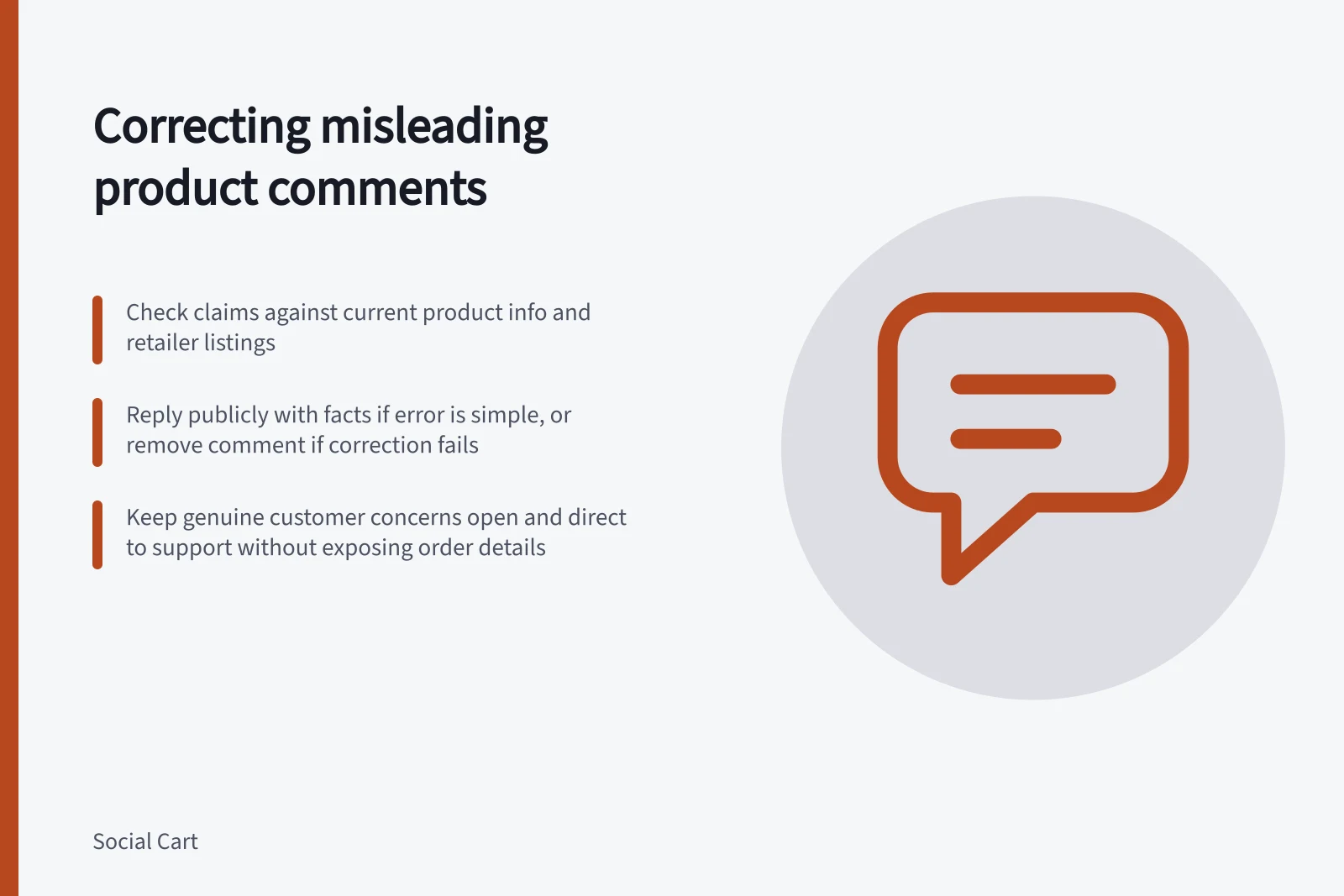
When a user comment on a retailer’s social page makes a product claim that could mislead shoppers, check the facts and correct the public impression. A visible reply may work; remove the comment where a reply cannot adequately correct it. Do not treat genuine criticism as false simply because it is negative.
Check the claim and its context
Separate a checkable statement from an opinion or personal account. “The pictured pack includes two refills” can be compared with the current offer. “I disliked the pack” describes a customer’s view.
A complaint may also expose an unclear or inaccurate retailer description. Check the business’s own post and listing before deciding the commenter is wrong.
Record the post, product or variant, disputed statement and current information used to assess it. If staff cannot establish the fact, ask the product owner. Have an adequate basis before calling a review fake or misleading or removing it.
Fact vs. Opinion in User Comments
- Fact (verifiable)
- The product pack listed on your website includes one refill.
- Opinion or experience
- I was disappointed with the pack size and expected more refills.
Choose a response that fixes the impression
For a straightforward error, a public reply can give the checked fact and its limit: which pack includes a refill and which does not. Inspect whether that reply appears beside the original comment in the customer view. A reply that few shoppers will see may leave the misleading impression in place.
Where a comment is demonstrably false and a reply cannot adequately correct it, use the moderation controls available to the retailer and record the reason. Set clear page rules and apply them consistently. If the retailer’s own post caused the confusion, correct that post and its destination too.
Public reply vs. comment removal
- Pros of public replyMaintains transparency, shows responsiveness, and corrects misinformation in real time for all viewers.
- Cons of public replyMay not be seen by all users; can be ignored if poorly worded or buried under other comments.
- Pros of removalEliminates misleading claims entirely; useful when the comment is clearly false and harmful.
- Cons of removalCan appear censorship-like if not applied consistently; may discourage honest feedback if overused.
Keep genuine concerns open
A customer reporting a fault or poor experience may need an individual response even if one detail in the comment is wrong. Acknowledge the concern without exposing order information. Direct the case to the retailer’s established support route, while correcting only the claim that could mislead other shoppers.
After a correction or removal, inspect the public thread and product information again. Note what changed and whether another active post repeats the same mistake. The decision should rest on the checked facts and what shoppers can still see.