Social Service
Social commerce trust
Help social shoppers judge reviews, product evidence and return information, and correct misleading comments without hiding genuine criticism.
A social shopping offer is easier to judge when shoppers can see who makes each claim, what supports it, what they will receive and how to get help if something goes wrong. For an Australian retailer, those answers should match across the post, shopfront and buying page.
Make the source of each claim clear
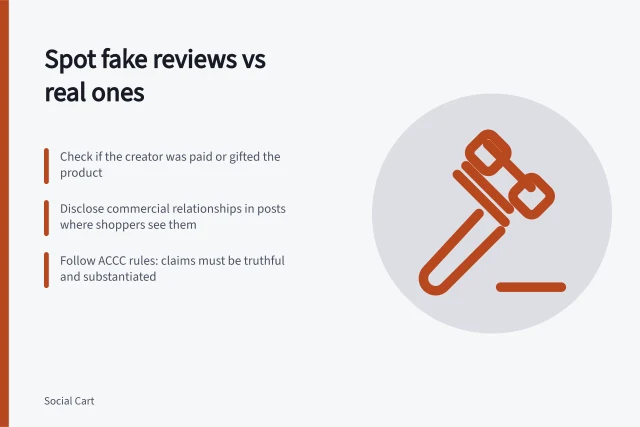
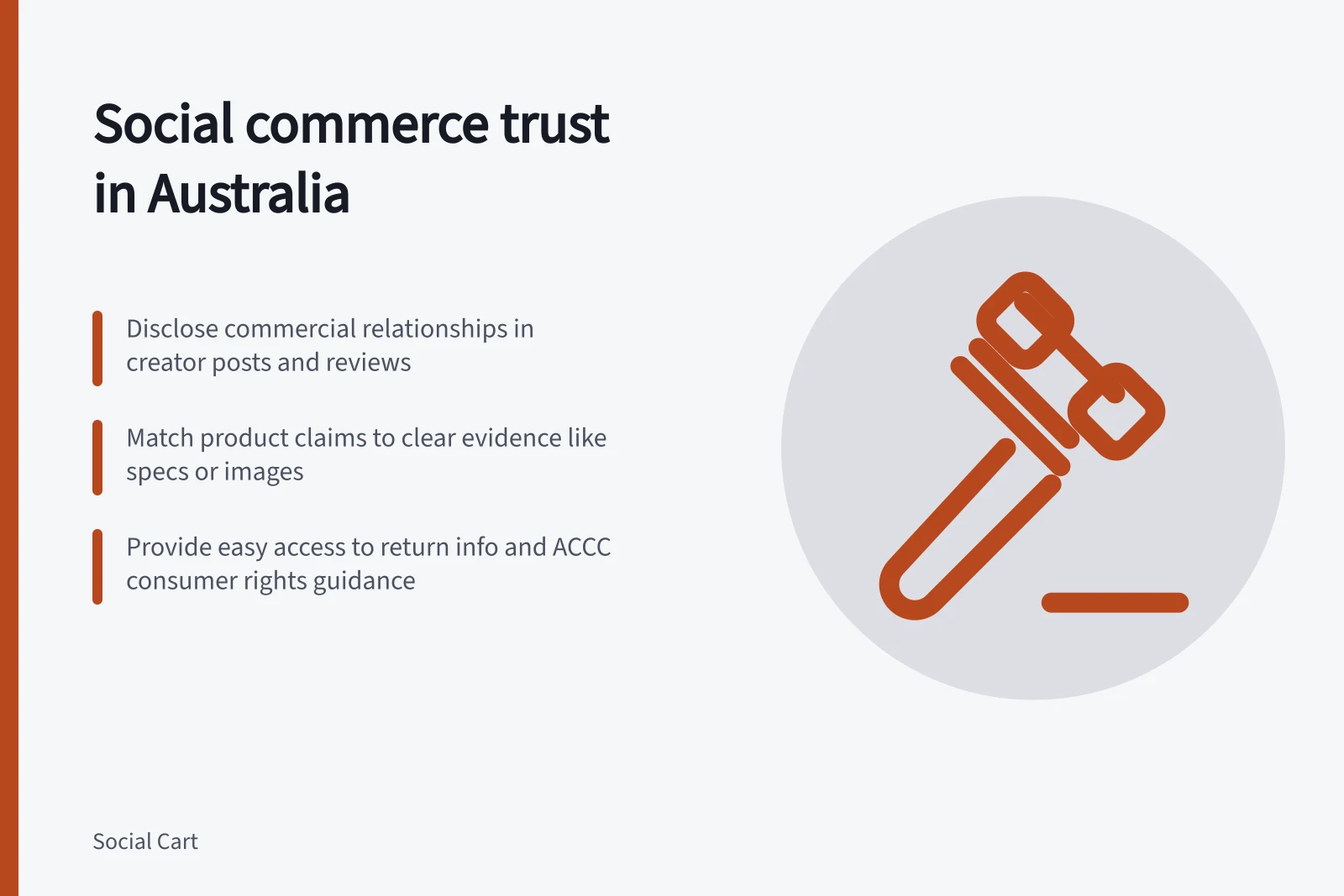
A customer review describes one person's experience. A paid or gifted creator post carries a commercial relationship; as a recommended practice, make that relationship clear to the audience.
A retailer's own demonstration is the business's product claim. A shopping link does not explain who paid for content or make a commissioned opinion independent.
Keep meaningful qualifications when sharing a review. As a recommended practice, disclose when customers receive an incentive to review a product, and invite honest reviews regardless of sentiment. Do not suppress genuine negative reviews merely to make the selection look more favourable.
Match product claims to evidence
Identify the version shown, the setup used and any accessory needed for a demonstrated result. Match evidence to the claim: an image for a visible feature, a checked specification for a measurement, current product information for pack contents. One demonstration under particular conditions does not prove a broader performance promise.
Compare the finished post with the item reached through its shopping action. If they describe different models or inclusions, correct the message or the route. Keep material limitations close to the claim they qualify.
Make returns information findable
Give shoppers a clear route to the retailer's return information before purchase. Explain how to contact the seller and how a request begins. Keep voluntary change-of-mind terms separate from consumer guarantee information, and direct shoppers to ACCC guidance on consumer rights and remedies.
For a product problem, explain how shoppers can contact the retailer and direct them to information about consumer guarantees. The ACCC does not resolve individual disputes about whether a guarantee has been met or which remedy applies, and does not provide legal advice.
Correct misleading comments
As an operational page-management practice, check factual product claims in comments on the retailer's pages. Where a comment is false or likely to mislead, consider responding clearly enough to correct the impression, or removing it where appropriate. A genuine negative experience differs from a false claim; do not remove it merely because it is critical.
Correct a general product fact in public. Move an individual order or payment problem to the retailer's support process without asking the customer to share private details in the thread.
Understand the ACCC’s role
The ACCC gives general guidance on how consumer law applies to social media promotions and advertising. It can require a business to back up claims made on social media, and may investigate or take compliance or enforcement action over false or misleading claims.
Online review concerns have a separate focus: reports can involve fake or misleading reviews and review manipulation. The ACCC uses reports to inform its education, compliance and enforcement work, and may investigate if a business misleads people about online reviews.
For consumer guarantees, the ACCC educates businesses and consumers and accepts reports about conduct people consider improper. It may investigate if a business misleads consumers about their guarantee rights.
Treat regulator guidance and individual customer support as different routes. A retailer still needs a process for handling a shopper's particular complaint.
Consumer protection facts from the ACCC
- Consumer guarantees under Australian lawRight to repair, replace, refund or cancel if a product fails to meet standards
- ACC C role in online reviewsInvestigates fake or manipulated reviews; does not resolve individual disputes
- False or misleading claimsBusinesses must back up claims with evidence; ACCC can take enforcement action
- Social media promotion complianceACCC provides guidance on advertising practices across platforms
Review one offer as a whole
For an active product, ask who made each claim, what supports it, whether the item for sale matches the evidence, where shoppers find return information, and whether comments leave a misleading impression. Record the discrepancy and its owner, then check the public view after a correction. Repeat when the product, offer or evidence changes.
In this guide
- Distinguishing customer reviews from paid demonstrationsTell customer reviews from paid or gifted demonstrations, disclose incentives and preserve the reviewer’s actual experience.
- Showing genuine product evidence in a social storefrontMatch storefront product claims to images, specifications and demonstrations, with important limits visible.
- Explaining a brand's return process where shoppers can find itExplain where social shoppers can find return steps while separating change-of-mind terms from Australian Consumer Law rights.
- Handling misleading user comments about a productCheck misleading product comments, correct the public impression and preserve genuine negative feedback.