Creator Content
Social commerce content
Plan social shopping posts around a buying question, an accurate product promise and a clear next step. Review content when the offer changes.
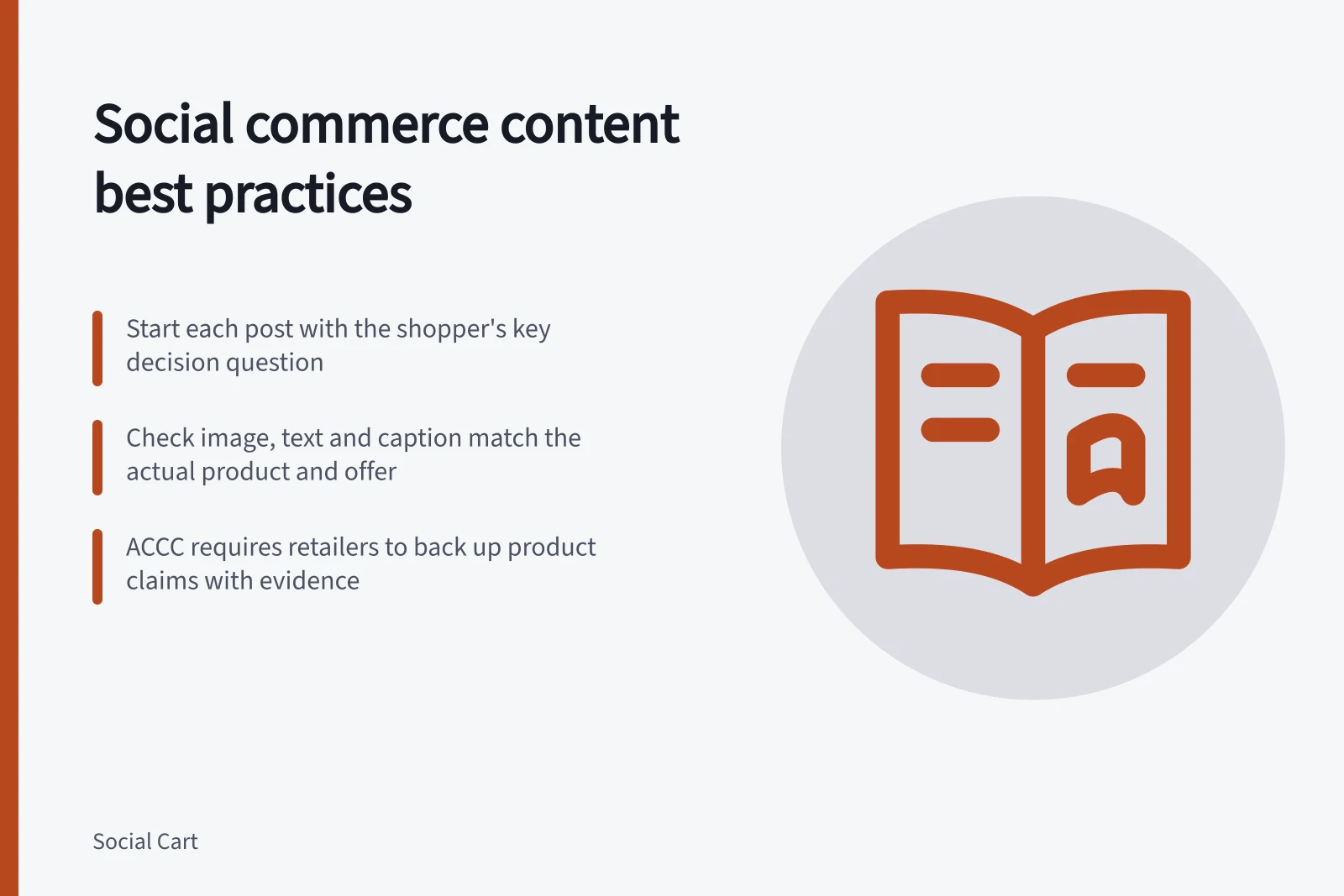
Social commerce content should help someone make a buying decision and reach the offer described. Start with the question the shopper needs answered, choose a format that can answer it clearly, and check the finished post against the item for sale.
Give each post one job
A demonstration can show how an item operates. A comparison can explain a difference between versions. A short answer can resolve a recurring purchase question. An offer post can state what is available and under which conditions. Choose the main job before making the asset; trying to cover every detail in a short post can make the important information hard to see.
| Content job | What the post should make clear | Where fuller detail may be needed |
|---|---|---|
| Demonstrate | The action and the version shown | Specifications and instructions |
| Compare | The difference that affects the choice | The full range of options |
| Answer | A checked fact and any condition | Individual advice or detailed compatibility information |
| Present an offer | The item, price and material conditions | Complete terms before purchase |
Write the intended shopper decision in one sentence. If the finished content does not help with that decision, revise it before adding a shopping action.
Check the whole promise
Review the image or footage, spoken words, on-screen text and caption together. Identify the model, size, colour and pack shown where those details matter. If an accessory appears but is sold separately, make that clear where a viewer might otherwise assume it is included.
Then compare the post with the buying destination. Can the shopper find the same item or clearly choose the version shown? Do the current price, inclusions and conditions agree? Correct a misleading statement in the post as well as any error at the destination.
Put a condition beside the claim it changes; a hard-to-find note may not correct a misleading first impression.
Treat product and benefit claims as statements the retailer may need to support, not just wording to approve at publication. The ACCC can require businesses to back up claims made about products or services. It accepts reports about possible false or misleading claims, uses reports to inform its education, compliance and enforcement work, and may investigate and take compliance or enforcement action over misleading claims. It does not resolve individual disputes about misleading claims.
Australia’s Social Commerce Market Growth (2025–2030)
- Key Driver
- Retail product dynamics and consumer demographics
- Regulatory Authority
- ACCC
Use a shopping action the account supports
Confirm where the available action leads before writing a call to buy. A product tag, website link and profile link may open different routes. Name the item the action concerns, especially when several products appear in the same post. Leave detailed tag setup to the channel's own requirements and check the resulting customer view for the retailer's account.
Keep a working record of the asset, the product or variant shown, the intended destination and who owns the product facts. This makes it easier to find posts affected by a later change.
Plan for audience and capacity
Choose a channel where the intended customers are active, rather than assuming every platform suits every retailer. Business.gov.au suggests using market research to find out which platforms customers use, and considering their age, gender and interests when identifying the target audience.
Set a purpose for the retailer's social presence before assigning content to a channel. Possible goals include attracting new customers, communicating with existing customers, positioning the business as an expert or promoting the brand to a new market; a business or marketing plan can help guide that choice.
Allow for the time and effort needed to manage each channel when planning the content workload. Business.gov.au advises that using one or two channels well is better than using many badly, and recommends planning and creating content in advance.
Match the format to the channel
Business.gov.au describes YouTube as useful for longer videos that inform or entertain and for demonstrating products or services; that can suit a buying job where shoppers need to see how something works.
Business.gov.au describes Facebook as useful for communicating directly with customers and building a community around a brand. Use that difference to decide whether a post belongs there, rather than publishing the same asset everywhere by default.
Review content when the offer changes
A changed price, pack, variant, availability, delivery promise or destination can make an older post inaccurate. Revisit the public asset and its shopping action after a material change. An update to a product record does not establish that every customer-facing message has changed.
Prioritise differences that affect what a shopper expects to receive or pay. Correct the affected content, then inspect the public route again. That inspection shows what appeared on the route checked; it does not establish what every shopper saw or whether an order was completed.
In this guide
- Demonstrating a product in a shoppable postPlan a shoppable product demonstration around one buying question, show the exact version and check that the shopping action matches the offer.
- Answering purchase questions inside social contentChoose buying questions a post can answer, keep conditions beside the answer and direct shoppers to fuller product details when needed.
- Showing price and product details without hiding important conditionsKeep the displayed price, pictured item and decision-changing conditions together in social shopping content. Recheck active offers when details change.